
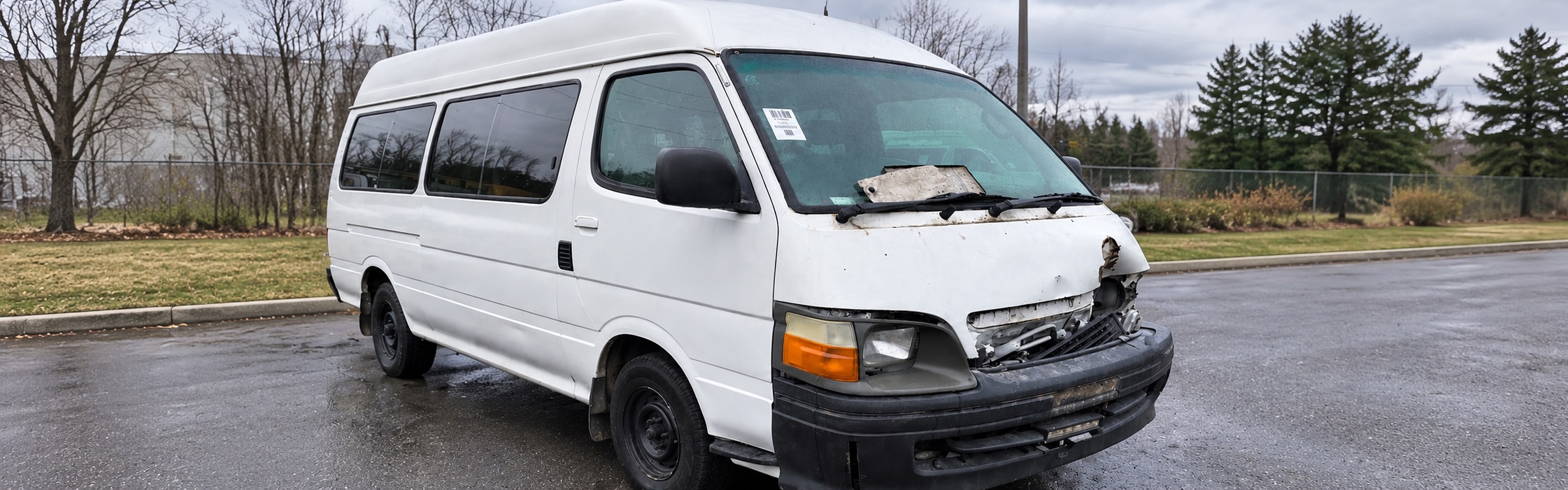
A van with a dead engine can seem worthless at first. If it will not start and the cost of replacing or rebuilding the engine is high, many owners assume the only option is to scrap the whole vehicle.
That is not always the case.
The engine is only one part of a van. Other components, body panels, electrical systems, wheels, interior parts and recyclable metals may still have value. Australia’s vehicle recycling industry is largely based on recovering usable parts and recyclable materials from end-of-life vehicles.
The Van Can Have Value Even Without a Working Engine
A failed engine can reduce the value of a van, but it does not automatically make the vehicle worthless.
For example, a van with a damaged engine may still have a usable transmission, straight body panels, good wheels, working electrical components or a clean interior. The value will depend on the van’s make, model, age, condition and demand for its parts.
This is particularly relevant with older commercial vans, where replacement parts can still be needed by owners and repairers.
What Parts May Still Be Worth Something?
A professional vehicle dismantler will generally look at the complete vehicle rather than just the engine.
Depending on its condition, useful components may include:
- Gearbox or transmission
- Differential and drivetrain components
- Alternator and starter motor
- Radiator and cooling components
- Suspension and steering parts
- Doors, mirrors and body panels
- Headlights and other lighting
- Wheels and usable tyres
- Seats and interior components
- Electrical and electronic parts
Perth auto recyclers commonly dismantle vehicles and recover components such as engines, transmissions, suspension, body panels, lights and interior parts for potential reuse.
Not every part will be reusable, of course. Components are normally assessed individually, and their condition and demand help determine whether they are worth recovering.
The Van’s Body Still Has Value
Even when the engine is beyond repair, the rest of the van has not necessarily lost all its value.
A van with a relatively straight body may provide doors, guards, bonnet panels, mirrors or other components for another vehicle. If the van has suffered accident damage, some sections may be unusable, but other areas could still be suitable for recovery.
The remaining metal can also be processed for recycling. Australia’s end-of-life vehicle industry recovers significant quantities of recyclable material from vehicles, although not every material is currently recovered at the same rate.
Selling May Make More Sense Than Repairing
The biggest question for an owner is often whether to repair the engine or sell the van in its current condition.
Start by getting a realistic repair estimate. Then consider the van’s age, mileage, condition and likely value once repaired.
For an older van, a major engine repair can be difficult to justify if the total cost is close to, or greater than, what the vehicle is worth. In that situation, selling the van as-is may be worth considering.
If you are looking for Cash for Vans in Perth, providing accurate information about the van’s make, model, year and condition can help a buyer assess it more realistically.
What Determines the Value of a Dead-Engine Van?
There is no single price for a van with an engine failure. Several factors can affect an offer.
- Make and model: Popular vans may have stronger demand for replacement parts.
- Overall condition: A van with a failed engine but a good body and interior may be more useful than one with multiple major problems.
- Parts demand: Certain gearboxes, body panels, electrical components and other parts may be sought after.
- Age and mileage: These can affect the condition and potential value of the remaining components.
- Removal requirements: If the van cannot be driven, transport may need to be arranged. Ask the buyer about collection before agreeing to a sale.
Don’t Spend Money on Repairs Without Comparing Your Options
One of the easiest mistakes is assuming an engine replacement is automatically the best solution.
Before committing to an expensive repair, get a clear estimate and compare it with the van’s current condition and likely value. You should also consider how much you have already spent maintaining the vehicle and whether other major repairs could be coming soon.
Sometimes repairing the van makes perfect sense. In other cases, selling it as-is can save you from putting more money into a vehicle that has reached the end of its practical working life.
Conclusion
A van with a dead engine can still have value because the engine is only one part of the vehicle. Usable components may be recovered, while suitable metals and other materials can enter recycling streams.
If your van will not start, do not assume it has to be repaired before you can sell it. Assess the repair cost, look at the vehicle’s overall condition and compare your options.
For some owners, selling the van in its current condition can be a simpler and more sensible way to move on from an expensive repair.